Product Description
Brand Thermo Fisher Scientific
Model Talos
Capacity 129 eV
CAT No TALOSF200I
Application Spectroscopy
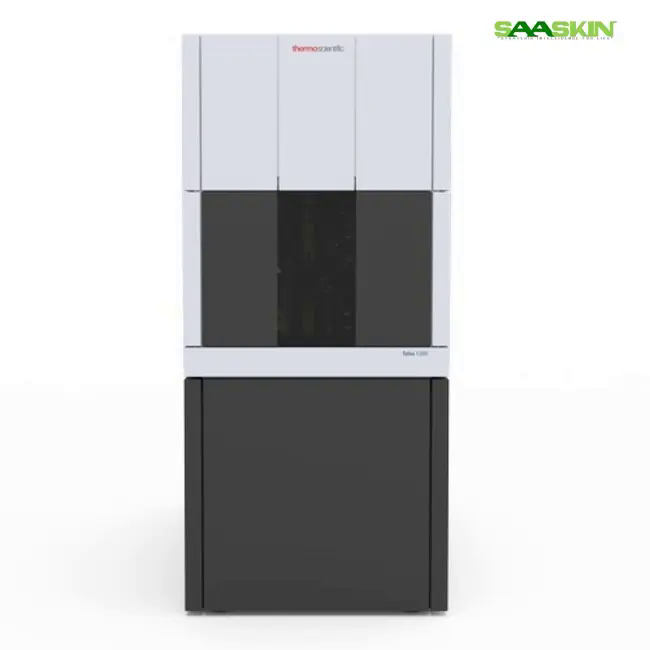
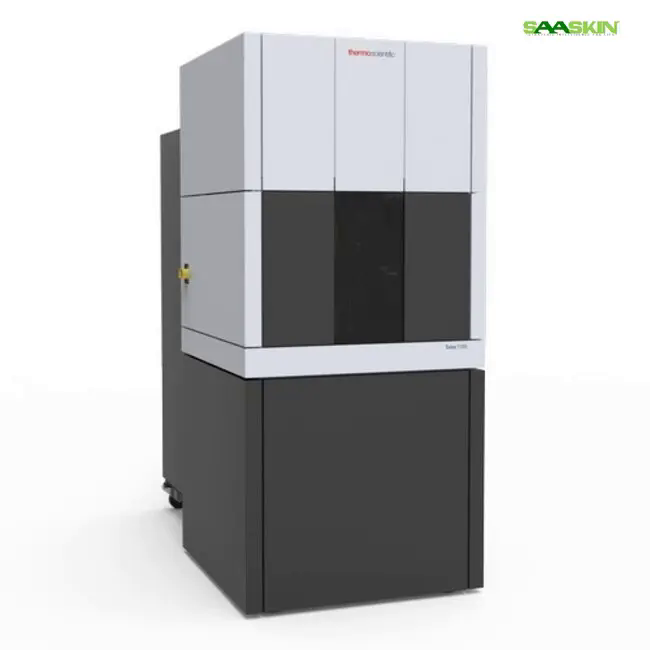
The Thermo Scientific Talos F200i (S)TEM is a 20-200 kV field emission (scanning) transmission electron microscope uniquely designed for performance and productivity across a wide range of Materials Science samples and applications. Its standard X-Twin pole piece gapgiving high flexibility in applicationscombined with a reproducibly performing electron column opens opportunities for high-resolution 2D and 3D characterization, in situ dynamic observations, and diffraction applications.
Cutting-edge Imaging CapabilitiesThe Talos F200i TEM delivers exceptional magnification and resolution, allowing scientists to visualize structures from atomic to micron scale. Its advanced electron optics, integrated detectors, and optional energy filter ensure comprehensive analysis of a wide range of materials and specimens.
Versatile Holder and Detector SupportSupporting single and double tilt, heating, cryo, tomography, EDS, and STEM holders, the Talos F200i provides unmatched adaptability for varied research needs. The robust set of detectors enables detailed compositional and structural analysis, crucial for multidisciplinary applications.
Integrated Automation and User-friendly InterfaceFeaturing automated workflow and intuitive software like TEM Imaging and Analysis (TIA) and Velox, the Talos F200i simplifies complex analysis. Researchers can easily acquire, process, and interpret high-resolution images, enhancing productivity and data accuracy for both beginner and expert users.
FAQ's of Thermo Scientific Talos F200i TEM:
Q: How does the Talos F200i achieve atomic scale resolution?
A: The Talos F200i utilizes an advanced X-FEG (Extended Field Emission Gun) electron source, sophisticated electron optics, and high-stability mechanical design. This combination enables the system to reach a lattice resolution of 0.16 nm in TEM mode and an information limit of 0.12 nm in STEM mode, delivering atomic scale imaging capabilities.
Q: What types of specimens can be analyzed with this electron microscope?
A: The system accommodates conventional 3 mm TEM grids and supports a wide variety of holders, including options for single and double tilt, heating (up to 1200C), cryogenic, tomography, EDS, and STEM, making it suitable for analyzing samples from material science, nanotechnology, and life sciences.
Q: When is energy filtering recommended in analysis, and is it supported on the Talos F200i?
A: Energy filtering is recommended when researchers need to improve contrast or perform chemical analysis by isolating specific energy losses. The Talos F200i supports optional post-column energy filters, including compatibility with the Gatan Quantum series, for enhanced analytical performance.
Q: Where should the Talos F200i be installed for optimal performance?
A: For the best results, the microscope should be installed in a vibration-free environment, with temperature stability within 1C per day, and supplied with clean AC power. Active vibration isolation and robust shielding in the frame further enhance system stability.
Q: What is the process for switching between imaging modes on the Talos F200i?
A: The instrument offers seamless transition between various imaging modes such as TEM, STEM, EDS, BF/DF, SAED, HRTEM, and tomography through its automated and software-driven workflows, primarily using TIA and Velox software interfaces. This automation accelerates setup and data acquisition for different analytical tasks.
Q: How is user safety ensured during operation?
A: The Talos F200i incorporates safety features such as interlocked systems, emergency stop functionality, and overheat protection mechanisms to safeguard both users and equipment during operation.
Q: What benefits does the integrated automation provide for research workflows?
A: Integrated automation streamlines acquisition, analysis, and reporting, reducing human error and enabling consistent results. This enhances throughput, saves time, and allows researchers to focus on interpretation and discovery rather than repetitive technical adjustments.











 Accepts only Export inquiries



 Send Inquiry