Product Description
Brand Thermo Fisher Scientific
Model NanoDrop
Capacity 1 uL
CAT No ND-ULTRA-GL
Application Spectroscopy
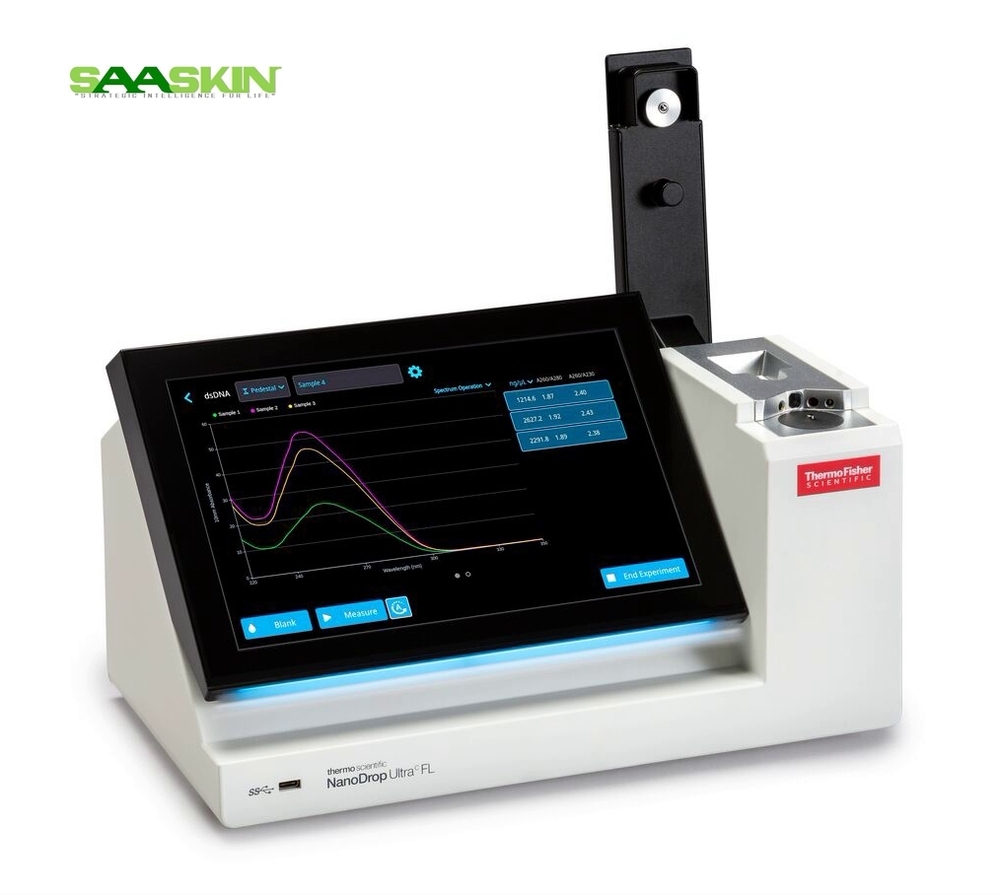
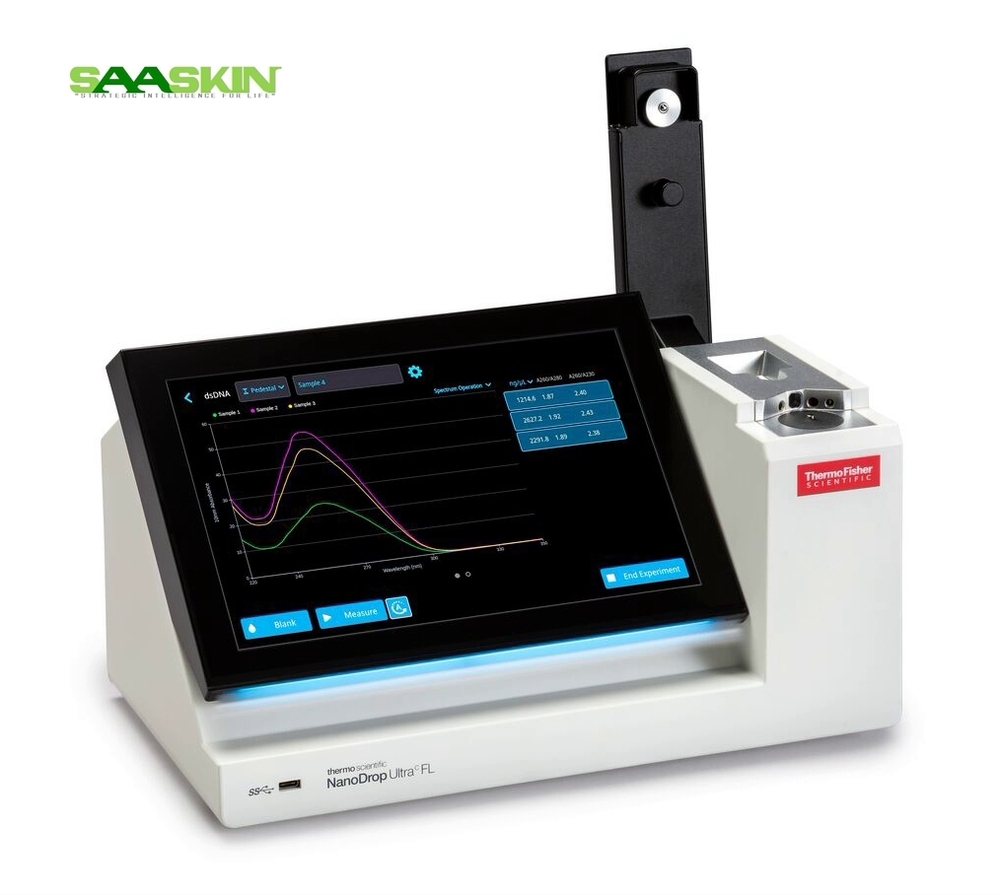
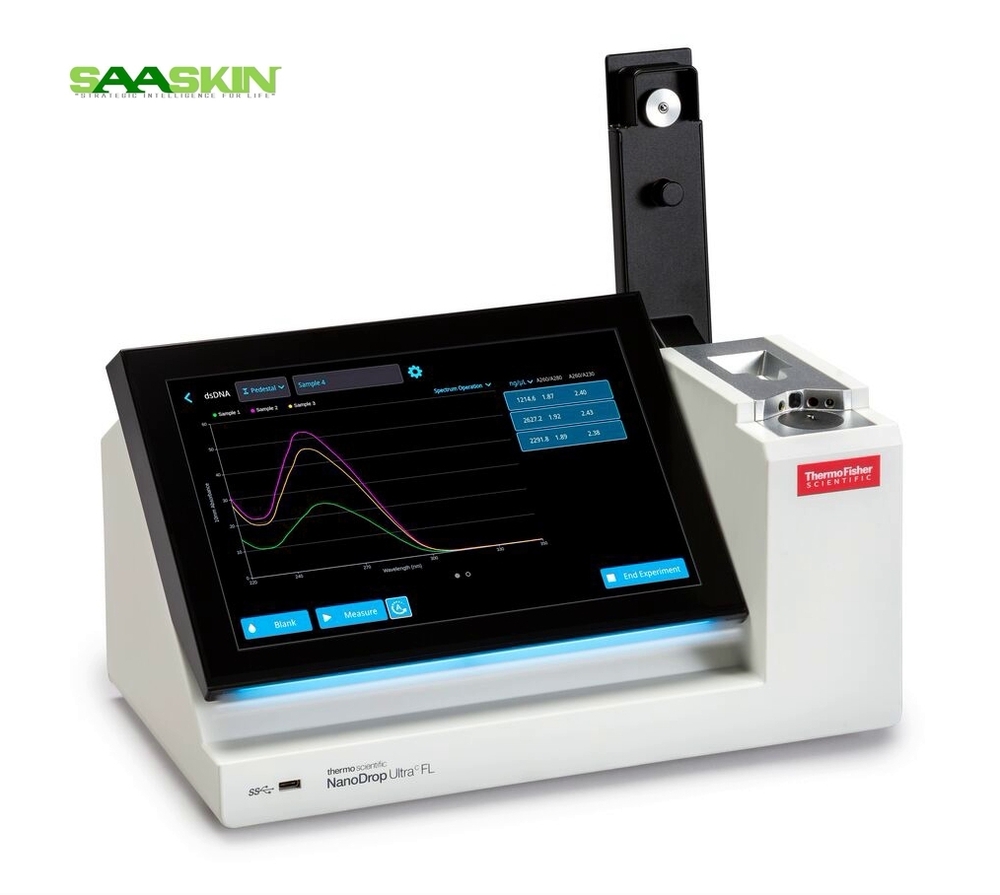
The Thermo Scientific NanoDrop Ultra Spectrophotometers and Fluorometers represent the next generation of microvolume detection. These cutting-edge instruments deliver exceptional accuracy and sensitivity for nucleic acid and protein analysis with sample volumes as low as 1.0 L. The NanoDrop Ultra is designed to streamline workflows across a wide range of fields, including genomics, proteomics, molecular biology, biotechnology, pharmaceutical, and life sciences research. It provides unparalleled precision, efficiency, and reliability in one compact device.
Precision Measurement in MicrovolumesEffortlessly quantify and assess the purity of nucleic acids, proteins, and other biomolecules from sample volumes as small as 0.5-2.0 L. The instrument's sensitivity (<2 ng/L dsDNA) and variable pathlength (0.05-1.0 mm) ensure accurate results even at low concentrations, optimizing samples for downstream applications in research and diagnostics.
Innovative Features and User-Friendly OperationThe high-resolution color touchscreen provides intuitive control, while NanoDrop operating software supports customizable and pre-defined protocols. Seamless data output to USB, computer, or cloud ensures efficient workflow integration. Durable construction using stainless steel and optical quartz, paired with touchless calibration, maximizes longevity and ease of use.
Versatile Applications Across Research FieldsThese spectrophotometers and fluorometers are perfect for applications in molecular biology, biochemistry, clinical laboratories, and the broader life sciences. Their compliance with international standards and dual-mode functionality ensure suitability for a variety of quantification and purity assessment tasks.
FAQ's of Thermo Fisher Scientific NanoDrop Ultra Microvolume UV-Vis Spectrophotometers and Fluorometers:
Q: How does the variable pathlength feature benefit sample analysis?
A: The NanoDrop's auto-ranging pathlength (0.05 mm - 1.0 mm) automatically adjusts to the sample's concentration, allowing for accurate quantification of both very concentrated and highly dilute samples without the need for dilution or manual pathlength adjustment.
Q: What types of samples and applications are suitable for this instrument?
A: This instrument is designed for quantifying and assessing the purity of DNA, RNA, proteins, and other biological samples. It's widely used in molecular biology, biochemistry, life sciences research, and clinical labs for various analyses, including nucleic acid and protein measurements.
Q: When is calibration required for the NanoDrop spectrophotometer?
A: Routine calibration is not required for normal operation. The system is factory-calibrated and built with robust materials to maintain accuracy, meaning users can operate the device with confidence immediately after setup.
Q: Where does the data output, and how can it be integrated into laboratory workflows?
A: Data can be directly exported to a USB drive, computer, or uploaded to the cloud. This flexibility allows easy integration with existing digital data management systems and ensures results are accessible for documentation, sharing, and analysis.
Q: What is the measurement process and typical time per sample?
A: Place a microvolume sample (0.5-2.0 L) onto the pedestal, close the arm, and initiate measurement via the touchscreen. Each analysis takes less than 8 seconds, streamlining workflow and allowing high throughput.
Q: How user-friendly is the operating software and display interface?
A: The instrument features a high-resolution, color touchscreen and intuitive NanoDrop operating software, allowing users to easily manage and customize measurement protocols without extensive training.
Q: What are the primary benefits for research and clinical laboratories?
A: The combination of ultra-fast, low-volume measurements, reliable accuracy, simple maintenance, and direct data export shortens turnaround time and minimizes sample waste. Compliance with RoHS, CE, and ISO 9001 ensures quality and enhances confidence in research and diagnostic results.











 Accepts only Export inquiries



 Send Inquiry