Product Description
Brand Thermo Fisher Scientific
Model KS18 (Standard)
Capacity 4 ft.
CAT No 51027120
Application Aseptic Condition
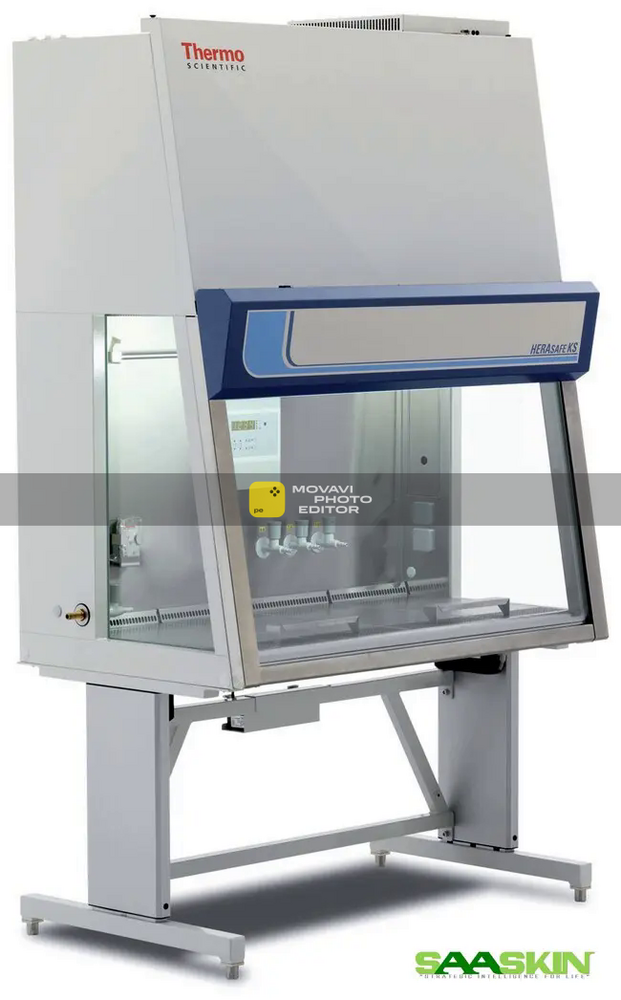
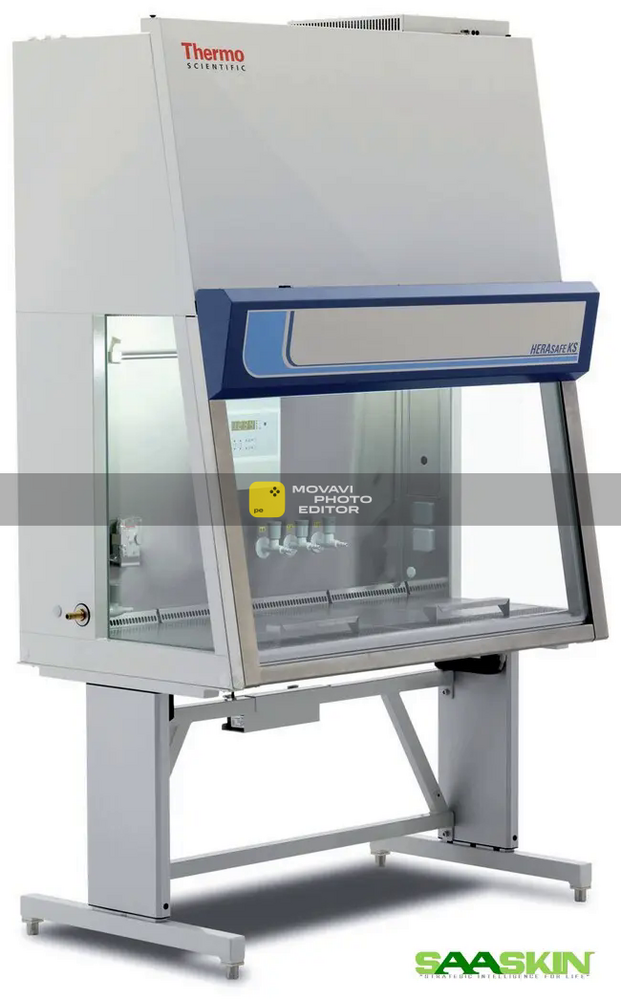
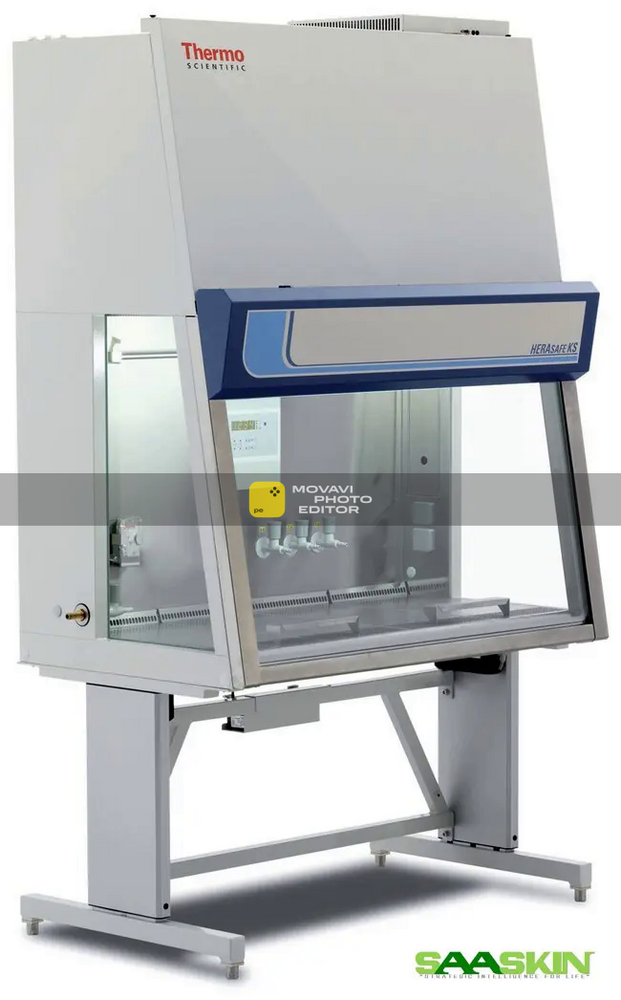
Perform quick, simple cleaning and fumigations with the Thermo Scientific Herasafe KS (NSF) Class II, Type A2 Biological Safety Cabinet, featuring an advanced design for protection and ease of use. Also includes automated airflow compensation and balancing with Thermo Scientific Smartflow, a spacious work area with comfortable armrests, and an intuitive eye-level control with hand-held controls to assist with ADA compliance
Advanced Safety and FiltrationEquipped with two high-efficiency HEPA filters, the Herasafe KS delivers protection by retaining particles down to 0.3 microns with an efficiency greater than 99.995%. Its NSF certification confirms stringent adherence to safety standards, making it suitable for sensitive procedures in academic, clinical, and industrial settings.
User-Friendly Operation and DesignThe cabinet features a digital airflow monitoring display, motorized sash, and intuitive electronic control panel. The 200 mm sash opening ensures a safe working environment, while the seamless stainless steel corners and powder-coated exterior allow for easy cleaning and long-lasting durability. Remote control functionality further enhances ease of use.
Optimal Laboratory PerformanceDesigned for comfort and efficiency, the work surface height of 750 mm reduces strain during prolonged use. Integrated audio-visual alarms alert users to any airflow deviations. With noise levels below 59 dB(A) and a large, well-lit workspace, lab personnel can safely and effectively carry out complex processes.
FAQ's of Thermo Scientific Herasafe KS (NSF) Class II, Type A2 Biological Safety Cabinets:
Q: How does the Herasafe KS (NSF) Class II, Type A2 Biological Safety Cabinet protect personnel and samples?
A: This cabinet employs two advanced HEPA filters with over 99.995% efficiency, capturing particles down to 0.3 microns. The airflow system maintains inflow and downflow velocities, ensuring contaminants are contained and not released into the environment, safeguarding both users and samples.
Q: What is the recommended usage for the Herasafe KS Biological Safety Cabinet?
A: The cabinet is intended for microbiological and biotechnological applications, as well as procedures in hospitals and laboratories where protection of personnel, products, and the environment is critical. It is widely used for sample preparation, microbiological research, and aseptic handling.
Q: When should the HEPA filters be replaced or inspected?
A: HEPA filters should be inspected and, if necessary, replaced according to the laboratory's safety schedule or if airflow alarms indicate reduced efficiency. Regular maintenance, as outlined in the user manual, ensures continual high performance and safety compliance.
Q: Where should the cabinet be installed for optimal performance?
A: The Herasafe KS should be installed in a clean, well-ventilated area free from direct airflow disturbances such as doors, HVAC vents, or high-traffic corridors. This minimizes airflow disruption and maximizes containment efficiency during operation.
Q: How is the work area cleaned and maintained?
A: Thanks to the seamless stainless steel internal surfaces, cleaning is straightforward-wipe down the work area with appropriate disinfectants and avoid abrasive materials. The cabinet's design prevents residue build-up, supporting routine decontamination and easy maintenance.
Q: What are the benefits of the motorized, UV-resistant sash and digital airflow monitoring?
A: The motorized sash allows effortless, precise adjustment of the working opening, enhancing safety. UV-resistant laminated glass protects against light degradation. Digital airflow monitoring provides real-time feedback and audio-visual alerts for deviations, ensuring operator safety.
Q: Which process alarms are included for user safety?
A: The Herasafe KS includes audio-visual alarms that activate if airflow deviates from safe parameters. These alerts prompt immediate corrective action to ensure ongoing laboratory safety for all users.










 Accepts only Export inquiries



 Send Inquiry