Product Description
Brand Thermo Fisher Scientific
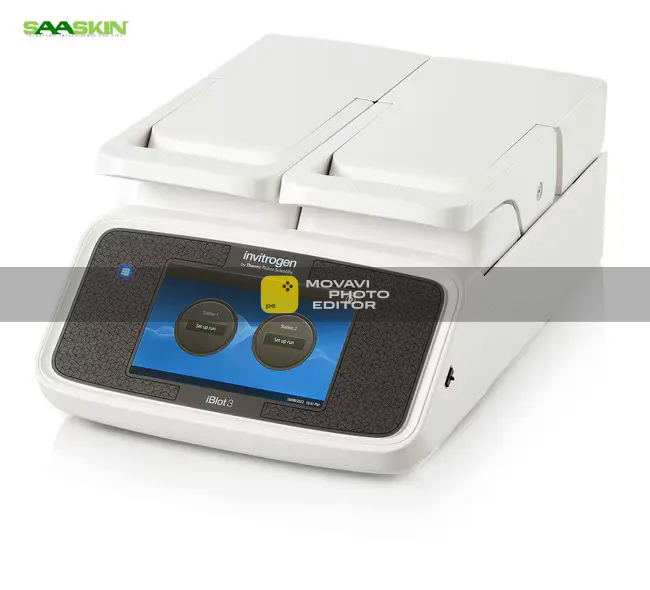
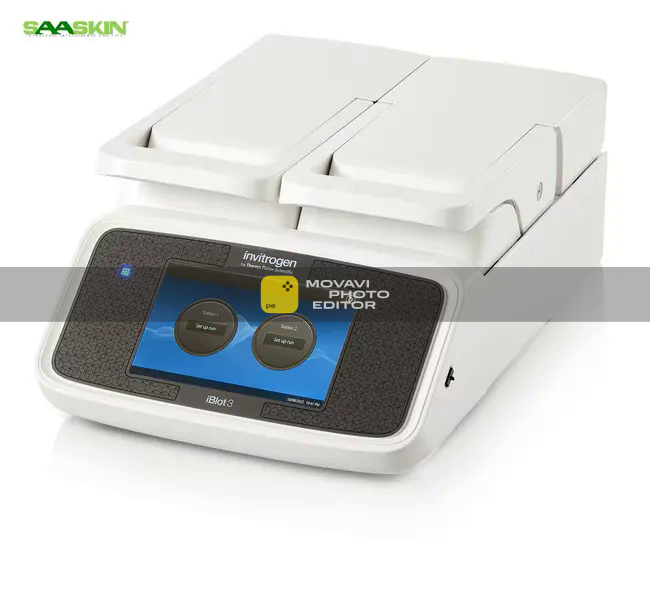
Model iBlot 3
Capacity 2 Midi or 4 Mini Gels
CAT No A56727
Application Blotting
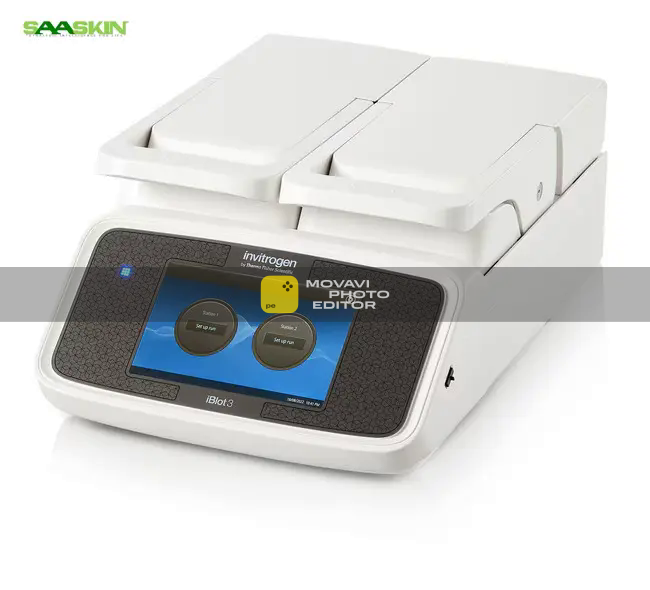
The iBlot 3 Western Blot Transfer Device is a dry transfer device that performs western blotting transfer efficiently and reliably in as few as three minutes and without the need for liquid buffers. The iBlot 3 system is compatible with both nitrocellulose and polyvinylidene difluoride (PVDF) membranes and offers equivalent or better performance compared with traditional wet-transfer methods in a fraction of the time. The iBlot 3 Western Blot Transfer Device is an integral part of the iBlot dry blotting system, which consists of the transfer device and consumable transfer stacks that contain the required buffers and transfer membrane (nitrocellulose or PVDF).
Streamlined Western Blotting ProcessThe iBlot 3 device accelerates the protein transfer essential to Western blotting, enabling results in as little as seven minutes. Its push-button operation and vivid touch interface simplify setup and monitoring. The included pre-set or custom protocols reduce variability and enhance reproducibility, making it ideal for consistent and high-throughput workflows.
Versatile Compatibility & Enhanced SafetyEngineered for flexibility, the iBlot 3 works seamlessly with both PVDF and nitrocellulose membranes. Its compact build manages up to two mini or midi gels per run. Safety is prioritized with automatic shutoff and overload protection, ensuring reliable and worry-free operation in busy laboratory settings.
FAQ's of Thermo Fisher Scientific Invitrogen iBlot 3 Western Blot Transfer Device:
Q: How does the iBlot 3 Western Blot Transfer Device speed up the blotting process?
A: The iBlot 3 uses advanced technology to transfer proteins from gels to membranes in as little as seven minutes, significantly reducing the time compared to conventional wet or semi-dry transfer methods.
Q: What types of membranes are compatible with this device?
A: The device is compatible with traditional PVDF (polyvinylidene difluoride) and nitrocellulose membranes, making it suitable for a variety of Western blotting applications.
Q: When should I use the pre-set protocols versus creating user-defined protocols?
A: Pre-set protocols are ideal for common or routine transfer procedures, offering convenience and standardization. User-defined protocols should be used when you require specific transfer conditions for unique samples or experimental requirements.
Q: Where can the iBlot 3 device be operated safely?
A: The device is designed for laboratory environments with temperatures between 15 and 32C and up to 80% humidity. It features safety measures like automatic shutoff and overload protection for secure operation.
Q: What is the process for transferring proteins using this device?
A: After preparing your gel and membrane, you place them in the sample trays, select your protocol via the touchscreen, and start the run. The device then transfers the proteins to the membrane rapidly and uniformly.
Q: What are the main benefits of using the iBlot 3 for Western blotting?
A: The primary benefits include reduced transfer time, improved reproducibility via digital protocols, compatibility with standard lab materials, and enhanced safety features that minimize operator risk.










 Accepts only Export inquiries



 Send Inquiry