Product Description
Brand Shimadzu
Model 8050G
Capacity 1 A order
CAT No EPMA-8050G
Application Spectroscopy
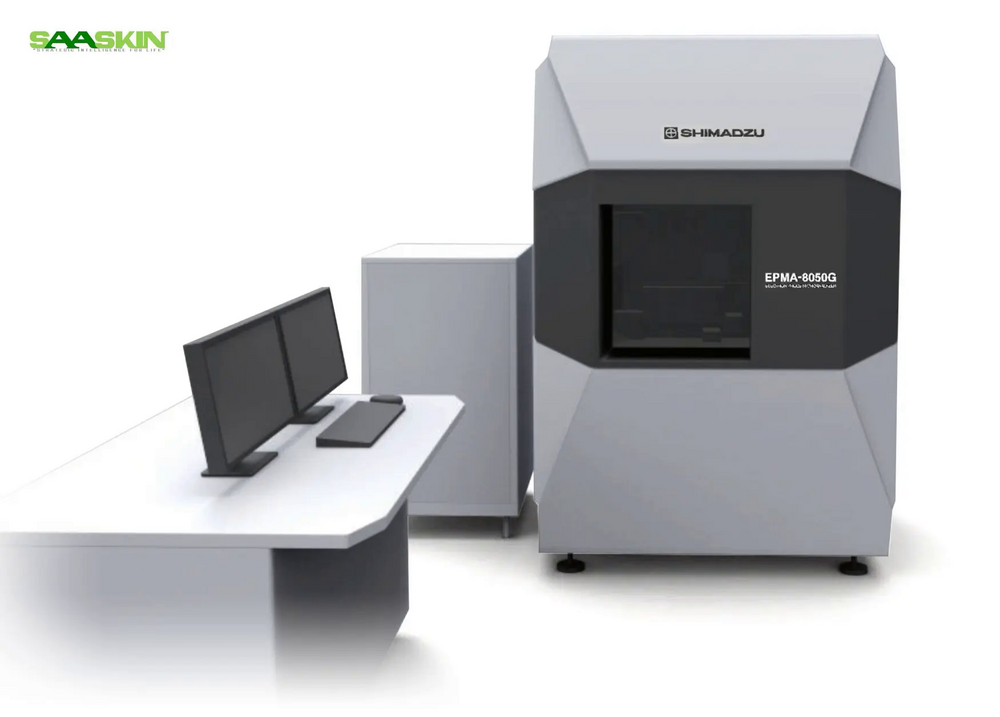
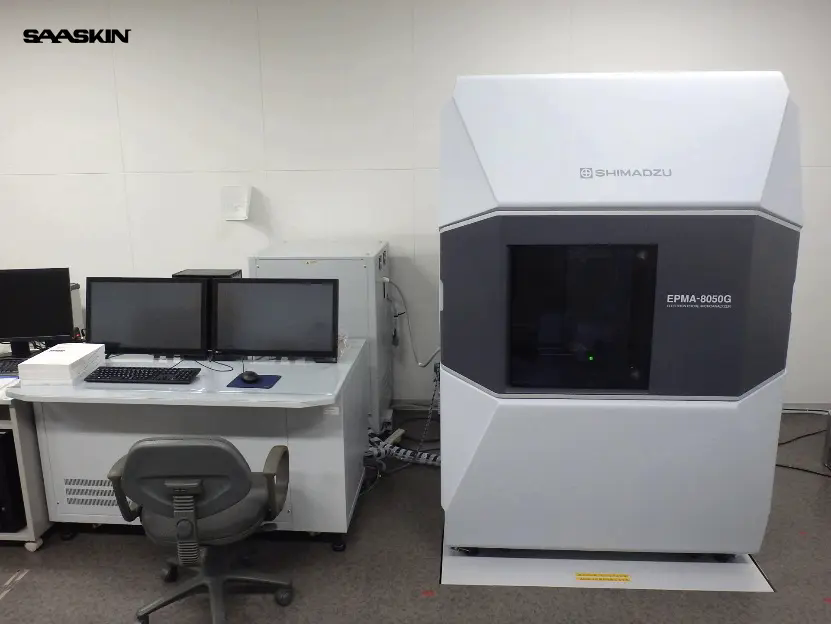
This instrument is equipped with a cutting-edge FE electron optical system, which provides unprecedented spatial resolution under all beam current conditions, from SEM observation conditions up to 1 A order. Integration with high performance X-ray spectrometers that Shimadzu has fostered through the company's traditions achieves the ultimate advance in analysis performance.
Advanced Analytical PerformanceEquipped with five high-sensitivity WDS, the EPMA-8050G achieves precise multi-element analysis from beryllium to uranium. Its ultra-high-resolution electron optical column, coupled with robust imaging options and trace element detection, ensures superior analytical accuracy and spatial resolution for a broad spectrum of sample types.
Automation and User-Friendly OperationThe EPMA-8050G features fully automated operation with computer-controlled stage movements, an easy-to-use software suite, and intuitive interface options. Automated vacuum monitoring, interlocked safety features, and batch or continuous analysis modes streamline workflow, enhancing productivity and user safety.
Flexible Applications and Robust DesignWith a magnification range from 100x to 100,000x and compatibility with standard samples up to 20 mm in diameter, the EPMA-8050G supports versatile research environments. Its durable construction and compliance with CE, RoHS standards ensure reliability for dealers, distributors, manufacturers, and research institutions alike.
FAQ's of Shimadzu EPMA - 8050G Electron Probe Micro Analyzer:
Q: How does the Shimadzu EPMA-8050G enhance elemental analysis in geological and material research?
A: The EPMA-8050G employs five wavelength-dispersive spectrometers (WDS) to achieve high sensitivity and accuracy for trace element detection, enabling multi-element analysis from beryllium to uranium. Its automatic X-ray mapping and microstructure evaluation make it ideal for geology, metallurgy, semiconductors, and material research.
Q: What imaging and analysis modes are available on the EPMA-8050G?
A: This system supports backscattered electron (BSE), secondary electron (SE), and characteristic X-ray mapping imaging modes, complemented by its ultra-high-resolution electron optical column and proprietary analysis software for comprehensive elemental and structural characterization.
Q: When is water cooling required for operation, and why?
A: Water cooling, provided via a chiller system, is necessary during operation to maintain stable thermal conditions and protect critical components. This ensures reliable performance and extends the lifespan of the electron gun and detectors.
Q: Where can the EPMA-8050G be effectively installed, and what environmental conditions are recommended?
A: Installation should be in a dedicated, stable floor space with a reliable AC 200 V power supply. The system operates optimally in environments with room temperature up to 80% relative humidity (non-condensing). Proper chiller setup is essential for temperature regulation.
Q: What is the analytical process for using the EPMA-8050G?
A: Samples are mounted on the multi-sample turret, and analysis parameters are configured through the control monitor and software suite. The system conducts sample imaging and elemental analysis via WDS and imaging detectors, with results digitally displayed and stored for further evaluation.
Q: How can users benefit from the automation features of the EPMA-8050G?
A: Full automation, including computer-controlled stage movement and automated safety checks, simplifies operation and enables efficient batch or continuous analyses. This reduces manual intervention, increases throughput, and minimizes the risk of user error.
Q: What regular maintenance does the EPMA-8050G require?
A: Routine maintenance includes monitoring vacuum levels, ensuring effective water cooling, cleaning detectors, and software updates. Adhering to these practices maintains reliable performance and prolongs the instrument's service life.











 Accepts only Export inquiries




 Send Inquiry