Product Description
Brand Bruker
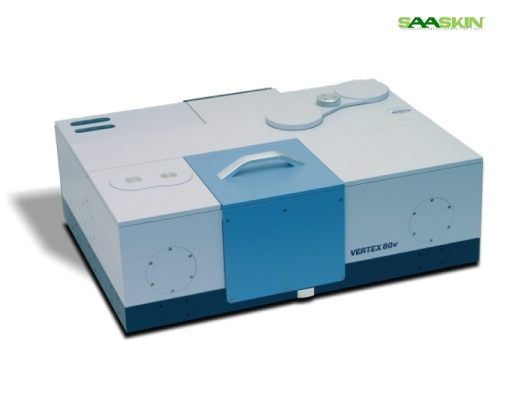
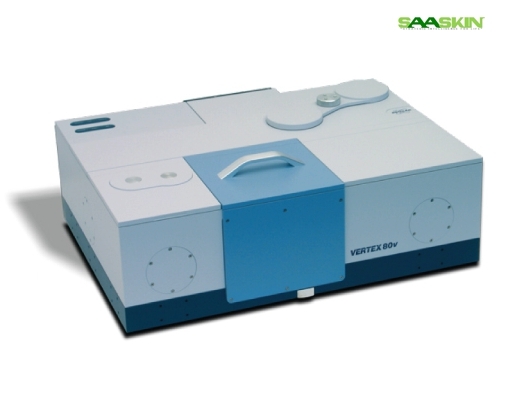
Model VERTEX 80/80v
Capacity PMA 50
CAT No VERTEX 80/80v
Application Spectroscopy
The VERTEX 80 and the VERTEX 80v vacuum FT-IR spectrometers are based on the actively aligned UltraScan interferometer, which provides PEAK spectral resolution. The precise linear air bearing scanner and PEAK quality optics guarantees the ultimate sensitivity and stability.
Exceptional Spectral Resolution and SensitivityThe VERTEX 80v spectrometer boasts a fully evacuated optical bench, minimizing atmospheric interference and enabling measurements with ultra-high precision. Its RockSolid interferometer design, combined with multiple, high-sensitivity detector options, ensures optimal signal-to-noise ratios for accurate analysis of trace samples. This advanced configuration supports the most challenging applications in chemical and material sciences.
Flexible Modular Design and ConnectivityWith a large sample compartment, upgradable modular architecture, and versatile connectivity options like USB, Ethernet, and external device integration, the VERTEX 80v adapts seamlessly to your workflow. Multi-detector and multi-beam splitter configurations cover a wide IR range, addressing various experimental requirements. Remote operation and a digital touchscreen interface streamline data acquisition and management.
Robust Software and ComplianceEquipped with the comprehensive OPUS software suite, the VERTEX 80v enables full-spectrum analysis, mapping, and kinetic studies via an intuitive GUI. The system is semi-automatic/automatic, meeting international laboratory standards (CE certified), assuring users of safety, reliability, and compliance across research and industrial environments.
FAQ's of Bruker VERTEX 80v Research FT-IR Spectrometer:
Q: How does the evacuated optical path of the VERTEX 80v benefit IR spectroscopy measurements?
A: The fully evacuated optical path eliminates absorption by atmospheric moisture and CO2, significantly enhancing spectral resolution and sensitivity. This ensures highly accurate and reproducible data, particularly important for detecting low-concentration trace analyses.
Q: What detector flexibility does the VERTEX 80v offer for different IR regions?
A: The VERTEX 80v supports multiple detector options, covering near, mid, and far infrared regions. Users can configure the system with various detector types and seamlessly switch between them to accommodate specific analytical needs. Liquid nitrogen-cooled detectors are also compatible for enhanced sensitivity.
Q: When should I consider using an integrated vacuum system or dry gas purge with this spectrometer?
A: The integrated vacuum system is ideal for routine operation, as it prevents atmospheric interference. For samples sensitive to vacuum, or when rapid atmosphere changes are needed, the optional dry gas purge system can be employed instead. Choose based on sample requirements and measurement objectives.
Q: Where can the VERTEX 80v be installed, and what are its power and space requirements?
A: Designed for research laboratories, the VERTEX 80v requires a standard 220-240 V AC, 50/60 Hz power supply and a benchtop space of 820 x 650 mm. Its robust build and moderate weight (approx. 63 kg) allow convenient placement in equipped research facilities.
Q: What process does the OPUS software support for data acquisition and analysis?
A: OPUS software controls all spectrometer functions, from data acquisition using the high-speed digitizer to advanced spectral analysis, mapping, and kinetic measurements. The intuitive GUI facilitates efficient workflow, while remote operation capabilities allow flexible lab management.
Q: How is the VERTEX 80v advantageous for advanced research and trace analysis?
A: Ultra-high spectral resolution (up to 0.2 cm1), low-noise electronics, and modular upgradeability make the VERTEX 80v ideal for advanced research. Its sensitivity supports precise trace analysis, and the large sample compartment accommodates a wide range of experimental setups.
Q: What benefits does the modular design offer for long-term research projects?
A: The VERTEX 80v's modular architecture allows users to upgrade with new detectors, beam splitters, and external modules over time. This ensures the system remains at the forefront of technology and adapts to evolving research needs without requiring a complete replacement.










 Accepts only Export inquiries



 Send Inquiry